<img src="https://www.operationcompany-innovation.com/800962.png" style="display:none;">
Skip to content
bg-pattern(1)
2026 - 2027 Launch Preview
Career & Technical Education

Offer intentional, relevant, and sustainable Career & Technical Education.

CTE is on the rise because it works when it's done well. As states continue to refine funding models and districts expand access, the emphasis is shifting from participating alone to quality, equity, and outcomes.

Subject is built to support that shift by helping schools offer CTE programs that are intentional, relevant, and sustainable—programs that respect both the realities of funding and the aspirations of students.

See Our CTE Content in Action
Entrepreneurship & Management Coursework
placeholder-video
Choosing a Board of Directors

Watch how we bring business concepts to life

Our CTE Pathways

01
Pathway 01

Agriculture, Food, & Natural Resources Career Cluster

Plant Systems

The Science and Business of Growth

Explore the intersection of plant science, environmental sustainability, and horticulture business. This pathway utilizes a docu-series approach to guide students through soil science and advanced plant growth. Students gain hands-on insights into careers in landscaping and agriculture, learning to apply scientific theory to the practical management of natural resources.

Principles of Agriculture Food, and Natural Resources
Horticulture Science
Advanced Plant and Soil Science
02
Pathway 02

Business, Marketing, & Finance Career Cluster

Management & Entrepreneurship; Business Administration

The Engine of Innovation

Step into the role of a founder and leader. In this pathway, students explore how businesses work in the global economy—from the first spark of an idea to the challenges of running and growing a company. Through "day in the life" case studies and a focus on ethical leadership, students learn key business terms and practice the communication skills they need to succeed in today's business world.

Principles of Business, Marketing and Finance
Entrepreneurship I
Accounting Fundamentals
Management Fundamentals
03
Pathway 03

Health Sciences Career Cluster

Health Data and Administration

The Digital Pulse of Modern Medicine

Discover how technology and healthcare connect to improve patient outcomes. This pathway bridges the gap between clinical theory and administrative practice, teaching students to manage vital patient data, protect privacy, and utilize digital health tools. Through simulations and medical terminology mastery, students develop the ethical framework and professional care required for the therapeutic and diagnostic healthcare fields.

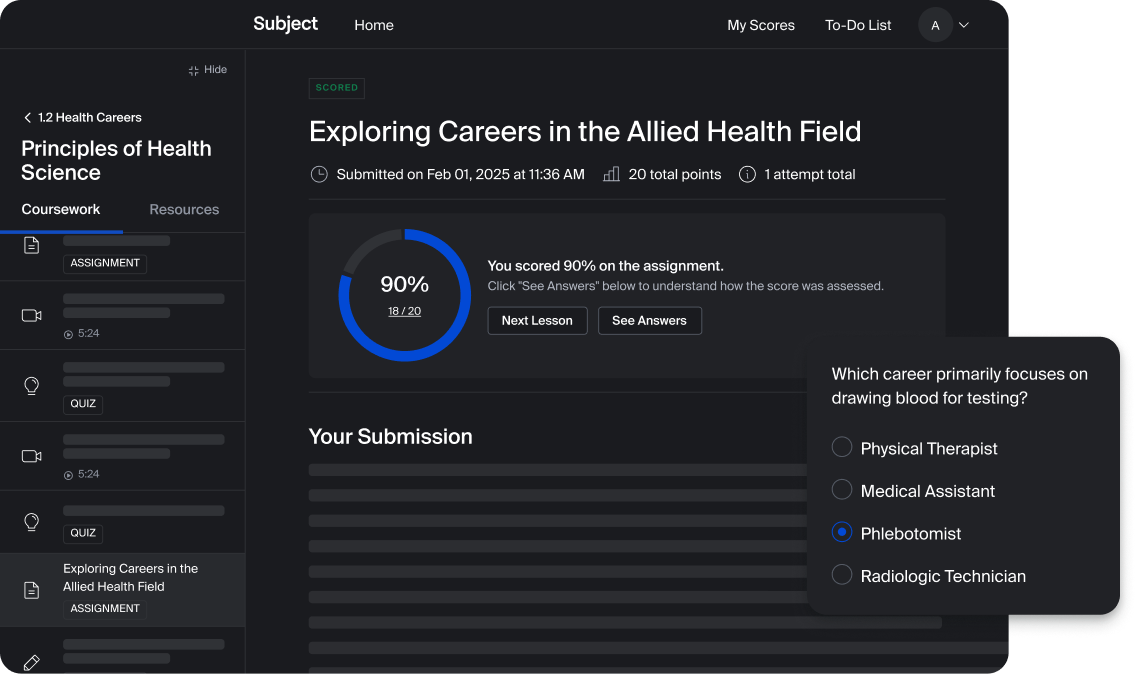
Principles of Health Science
Medical Terminology
Health Informatics
04
Pathway 04

Information Technology Career Cluster

Cybersecurity (Digital Technology)

From Consumer to Security-Conscious Problem Solver

Welcome to the exciting world of IT, where cybersecurity professionals work in network operations, security, and cyber defense. Students don't just learn about computers; they learn how to build them from scratch, configure complex networks, and diagnose real-world security threats. By mastering the "why" and "how" of modern hardware and operating systems, students develop the professional collaboration skills and technical vocabulary needed to protect the systems that power our world.

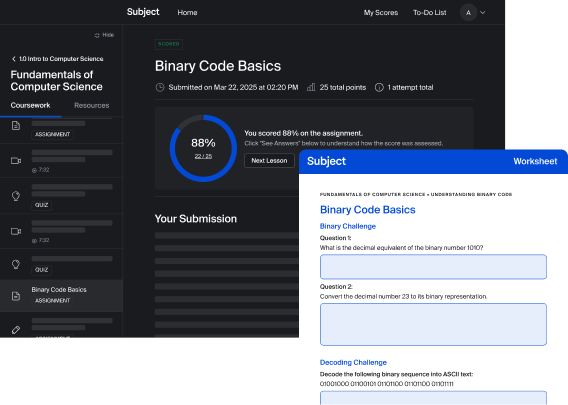
Fundamentals of Computer Science
Networking Fundamentals
Security Fundamentals
05
Pathway 05

Human Services Career Cluster

Cosmetology Introduction (single course)

The Artistry of Color and Conduct

Launch a career in beauty by blending creative artistry with technical discipline. This introductory pathway focuses on the science of hair, makeup, color theory, and other core cosmetology practices while establishing professional salon protocols. Students prioritize client communication and consultation skills, building the professional habits and technical foundation necessary for future licensure and salon management.

Principles of Cosmetology Design and Color Theory

Why States and Schools Are Reinvesting in CTE

Career and Technical Education is no longer viewed as an alternative track. Across states, it's increasingly seen as a core strategy for student engagement, workforce readiness, and economic resilience.

Policymakers are responding to clear signals: student participation in CTE is rising, employer demand for skilled workers continues to outpace supply, and traditional academic pathways alone are not meeting the needs of all learners. Over the past decade, more than half of states have increased funding for secondary CTE, in some cases dramatically. At the same time, national research shows that overall investment still lags behind participation and demand, reinforcing the need for programs that make efficient, intentional use of limited resources.

Districts feel this tension directly. Educators consistently point to the same challenges: programs that lack coherence, pathways that don't lead to credentials or postsecondary options, and funding models that make it difficult to scale high-quality offerings equitably. Schools are not just being asked to offer more CTE. They're being asked to offer better CTE.

What Educators Say Makes CTE Strong

🎯
Clear Pathways
Outcome-driven programs that connect to credentials and careers, not just disconnected courses.
🔗
Real-World Relevance
Alignment with actual labor market needs keeps students engaged and prepared.
Text
Equity & Access
Flexible programs that expand opportunity regardless of location or schedule.

Educators consistently emphasize that strong Career and Technical Education is defined by intention, relevance, and access. High-quality CTE programs are built around clear, outcome-driven pathways, not disconnected courses, so students understand how their learning leads to a credential, postsecondary opportunity, or career field.

Alignment with real labor market needs is essential. When coursework reflects how industries actually operate today, students are more engaged and schools are better positioned to support local workforce needs. Applied learning further strengthens this connection by giving students opportunities to practice skills, build confidence, and see the purpose behind what they are learning.

At its core, strong CTE gives learning a reason. It connects school to what comes next for students, while supporting schools and communities in building meaningful, sustainable pathways forward.

How Subject Supports Strong CTE

Our CTE offerings are built around educator priorities: coherent pathways, meaningful outcomes, real-world relevance, and programs that expand access rather than create barriers.
Coherent pathways with clear outcomes
Educators cite disconnected coursework as a common weakness in CTE. Subject designs pathways backward from defined outcomes, such as certifications, postsecondary alignment, or workforce entry, so courses build toward a meaningful next step, not just credits.
Frame 48096211
Technical learning plus durable skills
Beyond job-specific tasks, Subject integrates communication, problem-solving, and critical-thinking skills that transfer across roles and industries.
Relevant to a changing labor market
Many programs struggle to keep pace with industry shifts. Subject's coursework reflects current and emerging workforce needs, helping districts stay relevant without constant updates.
Frame 48096219
Built for access and equity
Strong CTE must work within the realities of a school day. Subject pathways align to graduation requirements and flexible delivery models, reducing barriers related to scheduling, staffing, and geography.
Certification-aligned without narrowing learning
Subject aligns courses to Tier I certification expectations without reducing instruction to test prep, preserving depth and conceptual understanding.
Designed differently than most market offerings
Strong CTE must work within the realities of a school day. Subject pathways align to graduation requirements and flexible delivery models, reducing barriers related to scheduling, staffing, and geography.